

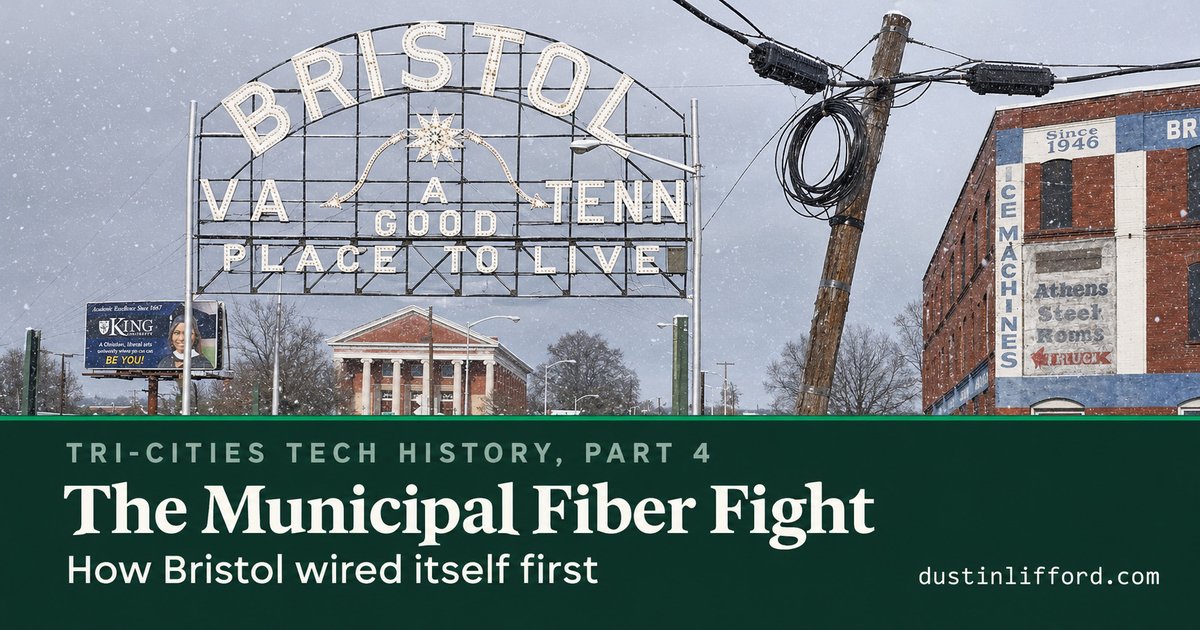
On Tuesday, June 19, 1945, representatives of six towns, a cooperative, and three power outfits met at the General Shelby Hotel in Bristol, Virginia, to sign papers. The Tennessee Valley Authority was buying the private company that ran most of the power systems in Northeast Tennessee and Southwest Virginia, and selling the pieces to the towns. Bristol, Tennessee got one. Bristol, Virginia got one. So did Johnson City, Elizabethton, Erwin, and Greeneville. The Bristol, Tennessee utility's own history of the day says it took nearly two hours just to get through the signatures.
Kingsport wasn't part of the deal. Its power company belonged to somebody else, and still does.
Nobody in that hotel was thinking about the internet, which is fair, since it was 1945. But that afternoon decided, more than any vote taken since, which Tri-Cities towns would one day be allowed to string their own fiber, and which one would wait for a company to get around to it.
This is the fourth part of a series on the technology history of the Tri-Cities. The first ranked the oldest domains, the second covered the bulletin boards, and the third covered the dial-up companies. This one is about what replaced the modem. It runs from the first cable modems in 1997 to 2019, and most of it happens on one street in Bristol.
Kingsport got there first
The last piece ended with a list of things I couldn't find, and the first item was when cable modems reached Kingsport. It turns out a trade magazine wrote it down at the time. InterMedia, which ran Kingsport's cable system, started selling internet over the cable in June 1997. By the end of July 1998 it had about 2,000 customers, which the magazine said was the break-even point.

It was half a cable modem by today's standards. Downloads came over the cable and uploads went out over a phone line, an arrangement the industry called "telco return." You still needed the modem you already had. But it was fast in the direction people cared about, and Kingsport was InterMedia's test market for it. "My boss and I are Internet junkies," Grant Evans, the system's technical operations manager, told Communications Technology in 1998, which is how a lot of things got started in those years.
InterMedia's systems went to Charter not long after. By March 2000, a federal report on rural broadband listed both Kingsport and Johnson City among Charter's cable modem markets.
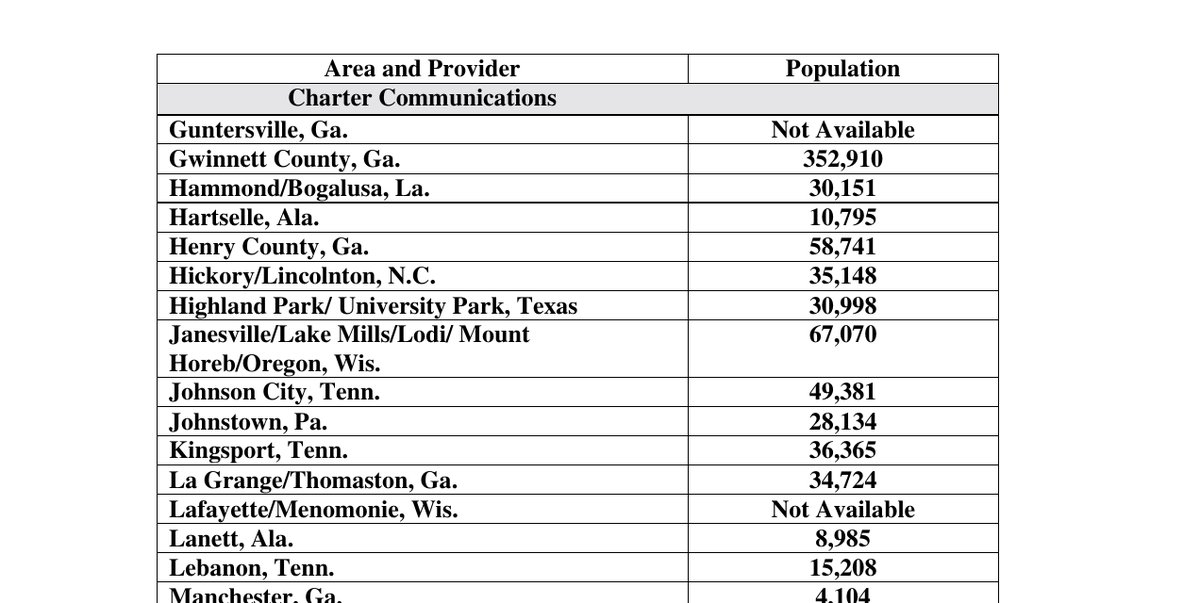
The phone company came next. Sprint told its investors that it launched DSL in five new markets in the first quarter of 2001, and one of them was "Kingsport/Bristol/Johnson City, Tenn." The Bristols were last in line for cable modems. As late as June 2002, a regional report said Charter and Comcast "are expanding cable modem services into Bristol," present tense.
One more loose end from the dial-up piece. In 1995 a call from Kingsport to Johnson City cost about three cents a minute, which shaped the whole early internet business here. That charge ended on December 1, 2005, when Sprint made every exchange in its Northeast Tennessee territory a local call to every other one. By then most people who cared had broadband, and the modem that needed the favor was in a closet.
A storm and nineteen substations
Neither Bristol set out to become an internet company. They set out to keep the lights on.
In 1998 an ice storm knocked out power to every customer of Bristol Tennessee Essential Services, the city-owned electric system that most people call BTES. The utility's account is that the phone company couldn't restore the communication lines between its 19 substations fast enough, so BTES decided to build its own, in fiber. Across the state line, Bristol Virginia Utilities, BVU, began building a fiber network in 1999, and hooked up schools and city offices first.
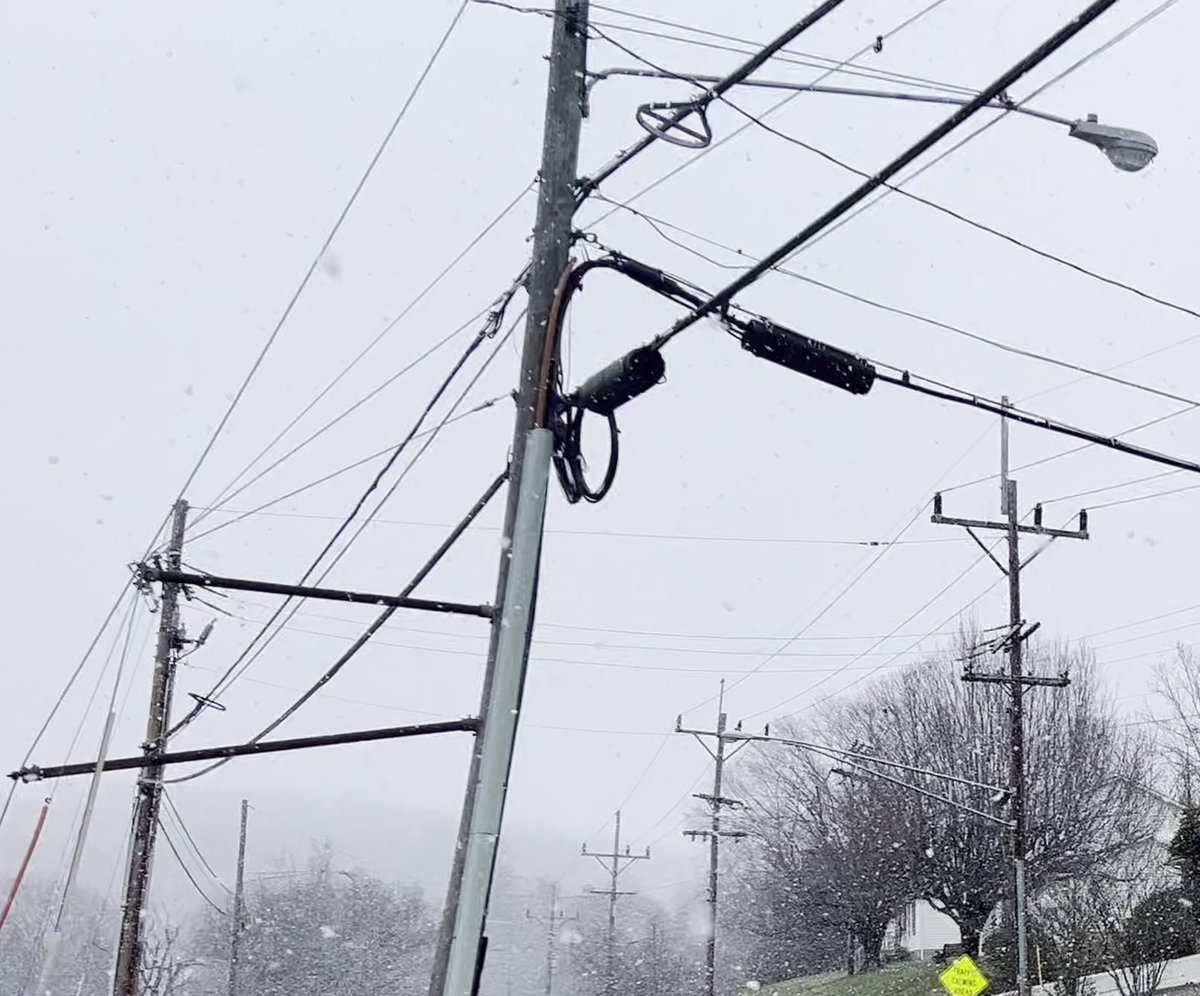
A utility that owns fiber between its substations has more capacity than a substation will ever use. What happened next was the same on both sides of State Street, about two years apart. Somebody asked whether the rest of it could be sold.
Bristol, Virginia, against everybody
In Virginia the answer was no, by law. The state barred localities from selling telecommunications service. Bristol sued, and on May 16, 2001, federal Judge James P. Jones ruled that the state's ban couldn't be enforced, because a federal law said no state could prohibit "any entity" from offering telecom service, and a city was an entity. The telephone industry's state association had joined the case on the other side. The Supreme Court read that phrase the opposite way in a Missouri case in 2004, but by then BVU was already in business.
BVU surveyed its customers that year and reported a 97 percent satisfaction rating and "overwhelming encouragement" to sell to the public. It also hired a lobbyist, and by its own account worked with one "for over 2 years to change Virginia's legislation."
Phone and internet were one fight. Television was another. On June 11, 2002, Bristol's city council granted BVU a cable franchise. BVU signed up a small group of what the court later called "beta testers" and planned to open cable service to everyone on December 2, 2002. A city survey that October found almost three-quarters of customers interested in switching.
Charter, the cable company, sued. On December 12, 2002, the same Judge Jones ruled against Bristol this time. Virginia follows something called the Dillon Rule, under which a city can do only what the state has said it can do, and the state had never said a city could run a cable company. The launch was off.
The legislature fixed that in 2003 with a law so narrow it may as well have had a street address. A city could offer cable television if it had the equipment running before December 31, 2002. "Bristol is the only Virginia municipal that meets that requirement," BVU's Jim Kelley told a trade magazine the next year.
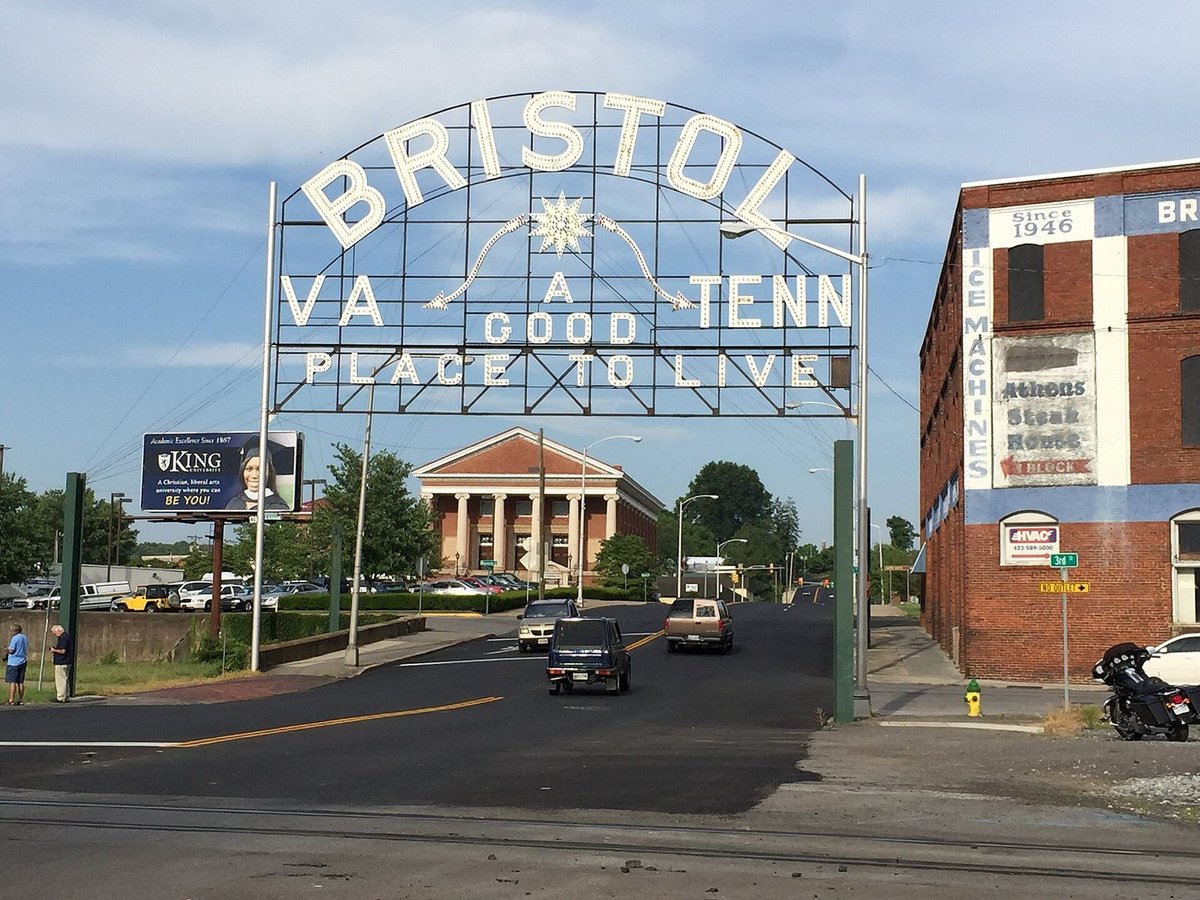
BVU told its electric customers in January 2003 that they could sign up for phone and internet. Cable television followed on July 1, 2003. The service was called OptiNet, and it ran on fiber all the way to the house, which was rare anywhere in 2003.
The phone company wasn't finished. Sprint's local company, the same United Telephone-Southeast that TriCon fought in 1996, complained to Virginia regulators that BVU was propping up its phone service with electric money and pricing it below cost. The commission dismissed the case in 2005. When BVU's chief executive, Wes Rosenbalm, testified to a congressional committee in 2007, he put the bill for all the legal and regulatory work at $2.5 million, "equivalent to the approximate cost of initiating service to an additional 2,000 customers."
Customers came anyway. Kelley said in 2004 that BVU had "installed service to over 5,500 customers since starting business in February of 2003."
By the end of 2005 BVU said it had put $43.27 million into the network and created 40 full-time jobs. Rosenbalm told Congress in 2007 that 65 percent of the homes in the city had signed up. In 2009 the Virginia General Assembly passed a resolution commending Bristol, which said that in 2003 the city, "having won litigation and legislative attempts to block its efforts, became the first municipal utility in the nation to launch an all fiber-to-the-user network" carrying phone, television, and internet. A commending resolution is the legislature being nice, not the legislature checking. But I haven't found an earlier one, and nobody at the time seems to have argued.
Across the street
On the Tennessee side, Mike Browder had run BTES since 1977, and he didn't think the electric company should be in the internet business. "In 2002, I had said we couldn't do it," he told an interviewer ten years later. "In 2005, we were providing service to customers."
Tennessee had made it easier than Virginia did. A 1999 state law let a city that ran its own electric system sell cable and internet, as long as it stayed inside its electric territory. BTES started selling internet and cable television in the fall of 2005 and added phone service in November 2006.
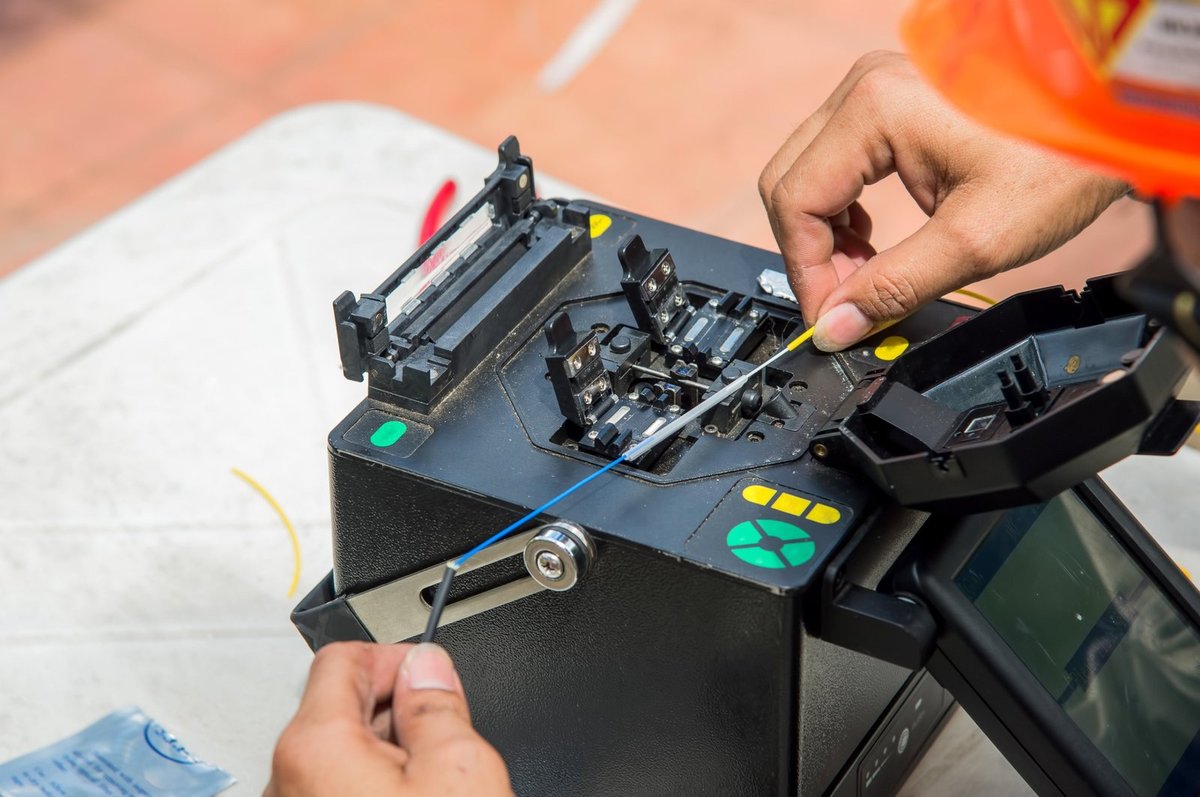
The speeds are worth a look, because they've been remembered generously. Browder later said the system started out capable of 20 megabits per second, and that is what the network could carry. What a household could buy was something else.
For $16.95 a month in 2006 you could have fiber to your house running at 64 kilobits per second, which is roughly a dial-up modem with good manners. The top plan was 4 megabits for $49.95. Those numbers look small now. In 2006 the plans were ordinary and the wire was not, because the same strand could carry a great deal more whenever BTES decided to let it.
It decided to. On November 19, 2012, BTES announced a gigabit connection available to all 33,000 of its electric customers. In a paper they wrote in 2015, Browder and two co-authors put the investment at over $20 million to start and more than $65 million over ten years.
"Skeletons in our closet"
Back in Virginia, two things happened in the middle of the decade that read differently now than they did then.
In 2005 the General Assembly passed a bill letting any locality in the telecom or cable business keep its "confidential proprietary information or trade secrets" out of public records requests, and discuss them in closed meetings. The reasoning was that a city utility competing with Charter shouldn't have to hand Charter its business plan. The bill's sponsor was Bristol's state senator, who also carried the 2009 commendation.
And in November 2006, Virginia Business ran a story on OptiNet's success and asked about the phone company's complaint. "We do not cross-subsidize," said Jim Kelley, BVU's vice president for operations. "We've worked very hard not to have skeletons in our closet."
Federal prosecutors later said that from January 2006 to February 2009, a BVU contractor was submitting invoices for work that hadn't been done, that Robert James Kelley Jr., BVU's vice president of field operations, was approving them, and that at least $160,000 came back to him as kickbacks. Kelley Jr. pleaded guilty in March 2015. Local news coverage called him Jim Kelley, and Virginia's state auditor lists him as BVU's operations vice president from 1993 to 2009. I haven't found a document that says in one sentence that he is the man quoted in 2004 and 2006. The name, the title, the employer, and the years all match.
He was one of nine.
| Name | Role at BVU | Case | Sentence |
|---|---|---|---|
| Wes Rosenbalm | President and CEO | Pleaded guilty in July 2015 to conspiracy to defraud the IRS and conspiracy to commit federal program fraud. | 33 months, later reduced to 24. |
| Stacey Pomrenke | Chief financial officer | Convicted by a jury in February 2016 on 14 counts, among them conspiracy and wire fraud. | 34 months. |
| Robert James Kelley Jr. | Vice president of field operations | Pleaded guilty in March 2015 to a conspiracy to commit mail fraud, money laundering, and to defraud the United States. | 30 months. |
| David Copeland | Vice president of field operations after Kelley | Pleaded guilty in March 2015 to a conspiracy to commit wire fraud and money laundering. | 24 months, later reduced to 18. |
| James Todd Edwards | Contractor, Edwards Telecommunications | Pleaded guilty in April 2015 to a conspiracy to commit wire fraud, mail fraud, tax fraud, and money laundering. | 24 months in July 2015. The state auditor later listed 12 months and a day. |
| Michael Clark | Contractor | Pleaded guilty in April 2015 to conspiracy to defraud the IRS. | 8 months. |
| Paul Hurley | Former Bristol mayor and BVU board chairman | Pleaded guilty in October 2015 to mail fraud and to making a false declaration to a federal grand jury. | 6 months, then 6 of home detention. |
| Bruce J. Clifton | BVU board chairman | Pleaded guilty to conspiracy to commit program fraud and to concealing a felony. | 5 months, then 5 of home detention. |
| G. Walter Bressler | General counsel | Pleaded guilty to the same two charges as Clifton. | 6 months, then 6 of home detention. |
The charges are as the Justice Department and the state auditor stated them, and the sentences are as reported at the time or listed by the auditor in 2016. Some of the false invoices, prosecutors said, were for drilling through rock to lay fiber under a state Tobacco Commission grant.
The state auditor's review, published in October 2016, ran well over a hundred pages. One paragraph stands out. Allegations about Rosenbalm reached BVU's board and its lawyer, the auditor wrote, and they discussed them in closed session more than once. "They decided not to contact law enforcement," the report says, "but instead offered Wes Rosenbalm a $269,240 severance package to keep allegations from becoming public."
None of this was a fiber problem. The network worked, and by most accounts worked well. It was a problem with who was watching the people who ran it, and for about a decade the answer was a board that met in private.
Sold
In February 2016, with the trials still going, BVU agreed to sell OptiNet to Sunset Digital Communications, a private company from Duffield, for $50 million. Two months later the General Assembly passed a law that shrank BVU's board, ordered the state audit, and took away the records exemption for BVU specifically. People sometimes say that law forced the sale. It didn't. The deal was already signed, and the law only spelled out what would happen to the board once the sale went through.
Closing took two and a half years. It came on August 2, 2018.
Of the $50 million, BVU's audit shows $37,923,333 as proceeds. The other $12,076,667, in the audit's words, "was paid to other entities as part of the sale agreement." BVU kept about $13.7 million of OptiNet's cash, which wasn't part of the sale, and booked a loss of $39,988,630. Sunset became Point Broadband the following spring, according to the company.
So the first city in the country to wire itself with fiber, by the legislature's reckoning, owned the result for fifteen years.
The line Tennessee drew
Tennessee never banned city broadband. It fenced it. The 1999 law gives the power to "each municipality operating an electric plant," and only "within its service area." BTES could sell a gigabit to a house on its own lines and nothing to the house across the road on somebody else's.
In early 2015 the Bristol, Tennessee city council voted 4 to 1 for a resolution backing a bill to lift that limit. "This is David-versus-Goliath situation in that little, tiny BTES versus companies like Charter and AT&T," Councilwoman Michelle Dolan said, as a broadband advocacy site quoted the local coverage. Chattanooga's electric utility went further and asked the Federal Communications Commission to override the state, and in 2015 the FCC agreed. On August 10, 2016, a federal appeals court reversed it. The fence stayed where it was.
Johnson City, last
Johnson City had owned its power system since that afternoon in 1945. Its turn came last. The Johnson City Power Board became the Johnson City Energy Authority on April 1, 2017, and renamed itself BrightRidge that October. It sent the state a broadband plan in the spring of 2018.
State law required the Comptroller to look the plan over first. The office's letter, dated June 21, 2018, was polite and unconvinced. It "could not determine the reasonableness of the projected uptake rate for residential broadband fiber customers of 45% by 2022." The law asked for the Comptroller's review, not his blessing, and the Johnson City Commission approved the broadband division on September 6, 2018.
Board minutes from June 2019 show 33 active customers around Jonesborough, a quiet launch in Johnson City that began June 3, and the first bills going out June 27. A year later BrightRidge reported 1,533 broadband customers and $898,302 in broadband revenue. It was a small start, and by then the two Bristols had been at it for a decade and a half.
Why not Kingsport
I'm from Kingsport, so this is the part I wanted to know, and the answer is back at the hotel.
Kingsport's electricity comes from Kingsport Power Company. It was organized in 1917, and it is a subsidiary of American Electric Power, one of the largest investor-owned utilities in the country. In 2008 AEP told the Securities and Exchange Commission that Kingsport Power served about 47,000 customers in Kingsport and eight neighboring communities, owned no power plants, and bought its electricity from Appalachian Power. BTES's history says the company TVA bought in 1945 owned the region's power systems "except for Kingsport Power and Appalachian Power." They weren't for sale, so they weren't sold.
Tennessee's broadband law starts with the words "each municipality operating an electric plant." Kingsport doesn't operate one.
I want to be careful here. I haven't found a record of Kingsport's leaders weighing a city network and being told no, and I'm not saying the law left the city with no possible path. I'm saying the door Bristol and Johnson City walked through was a door Kingsport didn't have, and the reason goes back to who owned the wires in 1917.

There is one wrinkle I enjoy. BrightRidge's annual report says its electric territory includes "part of the City of Kingsport." So a slice of Kingsport can get city-owned fiber after all. It just comes from Johnson City.
And to be clear, Kingsport has fiber now. It just didn't come from the city, and it took its time. Brightspeed, the company that now owns the old Sprint and CenturyLink phone lines here, announced a Tri-Cities fiber build in May 2024 that listed more than 26,500 planned locations in Kingsport. That was 21 years after Bristol, Virginia switched on OptiNet. The town that got cable modems first got fiber to the house last, and got it from the descendant of the phone company.
Where I come in
I should say that I've done website work for BrightRidge, including for its broadband service. Nobody there saw this piece before it ran, and everything about BrightRidge above comes from its public reports, board minutes, and the Comptroller's letter.
The first three parts of this series were about people in basements. This one is mostly about institutions, and I think that's the real change broadband brought. Dial-up could be sold by anyone with a phone line and nerve. Fiber takes poles, bucket trucks, bonds, a franchise, a lobbyist, and a lawyer, and in this region it also took a decision made in a hotel in 1945.
Sources, method, and credit
Five research tools each ran the same questions, and I checked what they brought back against the original documents before using it. Claims I couldn't trace to a record, a filing, or a dated account by someone who was there were left out. Several widely repeated figures about what OptiNet cost come from advocacy groups on one side or the other, and I didn't use those.
- BTES News, Fall 2010 (the 1945 transfer, the 1998 storm, launch dates, 20 Mbps); BTES, About Us; BTES News, Special Edition, Fall 2016
- Communications Technology, September 1998, pp. 20 and 44 (Kingsport cable modems)
- NTIA and USDA Rural Utilities Service, Advanced Telecommunications in Rural America, April 2000, Appendix A
- Sprint Corp., Form 8-K, event date April 17, 2001
- Appalachian Regional Commission, Links to the Future, June 2002
- Local Calling Guide, 2005 updates; Tennessee Regulatory Authority, Docket 06-00207, order of November 30, 2007
- City of Bristol v. Earley, 145 F. Supp. 2d 741 (W.D. Va. 2001); Marcus Cable Associates v. City of Bristol, 237 F. Supp. 2d 675 (W.D. Va. 2002)
- Commonwealth of Virginia, Broadband in the Commonwealth, FY 2006 Report, December 1, 2005, p. 47
- BVU, "BVU OptiNet: A Success Story," May 2007
- Lightwave, "Virginia utility blazes triple-play trail," August 1, 2004 (written by an equipment vendor)
- Paul Miller, "Bristol's broadband push," Virginia Business, November 2006
- U.S. House Committee on Energy and Commerce, "The Digital Future of the United States," testimony of Wes Rosenbalm, October 2, 2007
- Virginia Senate Joint Resolution 486 (2009); Virginia Senate Bill 959 (2005); Virginia Senate Bill 329 (2016)
- Community Broadband Bits, episode 24, interview with Mike Browder, December 2012
- BTES Comprehensive Annual Financial Report, fiscal 2007, p. 44; BTES, gigabit announcement, November 19, 2012; Browder, Czuchry, and Eads, American Society for Engineering Education conference paper, 2015
- U.S. Attorney's Office, Western District of Virginia: Kelley and Copeland pleas; Clark and Edwards pleas; three sentenced; Rosenbalm plea; Hurley plea; Pomrenke sentence; Bressler and Clifton sentences
- WCYB: "Prison for all 3 BVU defendants sentenced," June 18, 2015; Edwards sentencing, July 21, 2015; restitution, November 24, 2015
- Virginia Auditor of Public Accounts, Review of Bristol Virginia Utilities Authority, October 2016 (copy hosted by the Bristol Herald Courier)
- Paula C. Squires, Virginia Business, February 10, 2016; BVU Authority, audited financial report, fiscal 2019
- Tennessee Code Annotated § 7-52-601; Community Networks, March 23, 2015; Tennessee v. FCC, 832 F.3d 597 (6th Cir. 2016)
- BrightRidge: release, September 7, 2018; board minutes, June 25, 2019; annual report, fiscal 2020; Tennessee Comptroller, letter of June 21, 2018
- American Electric Power, Form 10-K for 2008
- Brightspeed, Tri-Cities fiber announcement, May 15, 2024
Not Found, after several research passes: the dates cable modems arrived in either Bristol, and the actual launch date in Johnson City, which I can only place before March 2000; OptiNet's first paying customer and the exact first day of service; which council member voted no in Bristol, Tennessee in 2015, and whether that vote was in late February or early March, since two records disagree; and the court order behind one contractor's shorter sentence. If you worked on any of these networks, pulled the fiber, answered the phones, or were an early customer and still have the first bill, I'd like to hear from you.